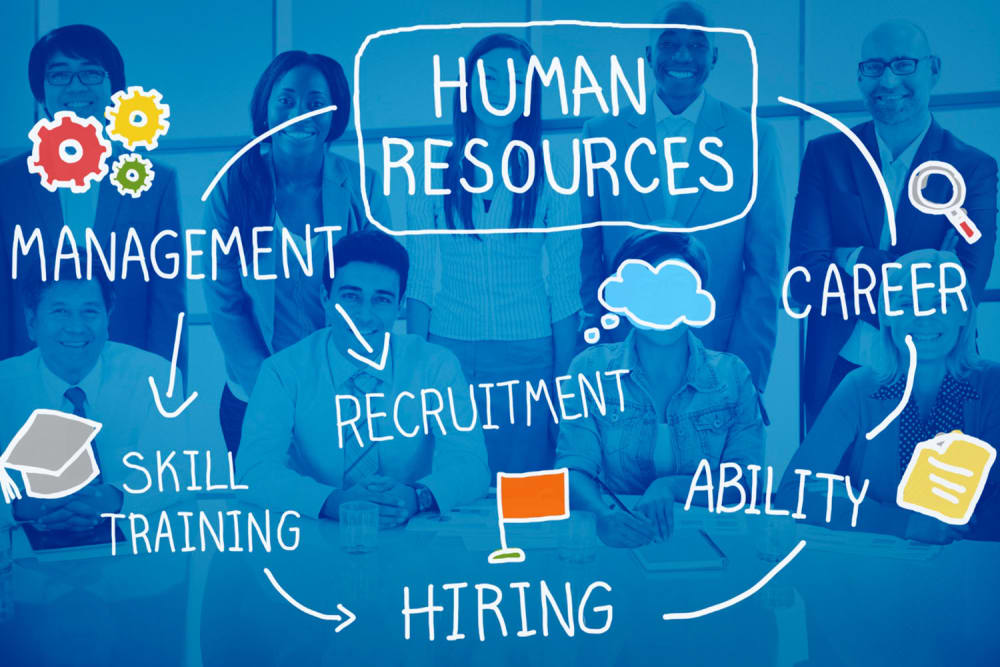
Human Resources is all about people. Ironically, it is also the sphere with the highest number of software tools trying to automate, streamline, or outright replace the HR team itself.
And for good reason. Modern HR teams are no longer just personnel specialists. They handle employer branding, culture building, talent strategy, performance management, and employee experience, often simultaneously, and often without growing headcount to match.
HR software has genuinely solved a lot of this. Hiring workflows that once lived in email inboxes now run on structured pipelines. Onboarding checklists that used to fall apart on day one are fully automated. Payroll that took days to process runs overnight.
And while the market looks saturated with different HR tools, new products keep launching, and many of them win. Most existing tools were built for an older version of work: traditional offices, full-time employees, and local teams. Today's reality of remote-first companies, global contractors, fractional talent, and AI-assisted hiring has moved much faster than the software.
Below, we map what HR processes are already automated, which tools handle them today, and where the gaps are large enough to build something new.
Recruitment and candidate screening
Recruitment is one of the most time-consuming HR functions and one of the most automatable. Today's tools can post job openings across multiple boards simultaneously, parse incoming resumes, score candidates against role criteria, and send interview invitations or rejection emails without anyone having to lift a finger. More advanced platforms go further, running AI-powered screening calls or async video interviews before a recruiter gets involved.
Tools that do it today:
- Culture Amp: strong on the employee engagement and survey side
- 15Five: lighter-weight, weekly check-ins and pulse surveys
- Lattice: comprehensive, strong on goal-setting and career development tracks
- Leapsome: European-founded, good compliance with German works council requirements
Where the SaaS opportunities are:
Every Applicant Tracking System (ATS) scores candidates using the same generic logic: keywords, years of experience, and a rough role fit. None of them know anything specific about your company: which hires worked out, which didn't, and what early signals actually predicted performance. The opportunity is a screening product that learns from a company's own hiring history. The data already exists - inside HRIS systems, performance reviews, and tenure records. Connecting that data back to the top of the funnel so screening logic improves over time based on real outcomes is something nobody has built cleanly yet.
Also, most ATSs are built for white-collar, office-based roles. Healthcare, construction, logistics, and hospitality all have hiring workflows that general tools handle poorly - shift-based availability, certification requirements, high-volume seasonal hiring, and multilingual candidate pools. Vertical ATS products consistently outperform general-purpose ones in retention and user satisfaction, and most verticals remain underserved.
Interview scheduling
Coordinating interviews is one of those tasks that sounds simple but quietly eats hours every week. Automated scheduling tools eliminate the back-and-forth entirely - syncing interviewer calendars, sending candidates a self-scheduling link, and handling reminders, rescheduling requests, and no-show follow-ups without any manual input.
Tools that do it today:
- Calendly: general-purpose, widely used for recruiting
- GoodTime: built specifically for interview scheduling at scale, with interviewer load balancing to spread the workload equally among all the employees that have to be involved
- ModernLoop: strong favorite among tech companies for structured interview loops and automation
- Paradox: great for high-volume recruiting with conversational AI scheduling
Where the SaaS opportunities are:
Scheduling is solved. What isn't solved is interview intelligence, turning what happens during the interview into structured, comparable data. A tool that standardizes interview output - not just records it, but structures it against role criteria - would feed better hiring decisions and, over time, better screening models.
Additionally, most companies have no visibility into how well their interviewers actually perform. A product that tracks interviewer patterns - question quality, candidate drop-off rates, correlation between interviewer scores and eventual hire success - would help companies improve their hiring process from the inside, not just at the top of the funnel.
Onboarding
Onboarding has one of the most manual, error-prone processes in HR. Modern onboarding tools change that by triggering a full sequence of tasks the moment an offer is accepted: collecting documents, gathering e-signatures, requesting equipment, creating accounts across company tools, assigning training, and scheduling introductory meetings, all automatically, before the person's first day.
Tools that do it today:
- Rippling: strongest on the IT provisioning side, creates accounts across 500+ apps automatically
- HiBob: modern, user-friendly option popular with scaling tech companies
- Deel: built for global teams, handles local compliance and contracts
- Enboarder: focuses on the human side, nudges and check-ins over the first 90 days
Where the SaaS opportunities are:
Most onboarding tools are built around a single assumption: a full-time employee joining permanently. They handle fractional workers, short-term contractors, and agency staff poorly - different contracts, different access levels, different compliance requirements. A product built specifically for companies running a mix of employment types, with the right logic baked in per worker category, would fill a gap that every growing startup eventually hits.
Also, most platforms offer the same onboarding flow regardless of the role. An engineer, a salesperson, and a finance hire all need very different introductions to the company. A product that builds dynamic, role-specific onboarding journeys, pulling in the right tools, the right people, and the right training for each function, would be meaningfully better than the one-size-fits-all approach most teams currently work around.
Payroll and contractor payments
Payroll is one of the oldest HR functions that can be highly automated. Modern payroll tools handle salary calculations, tax withholding, payslip generation, and direct deposits automatically, along with end-of-year filings and compliance reporting. Besides, as teams become more distributed, payroll tools are increasingly expected to handle multi-currency contractor payments with local tax and compliance logic built in per country.
Tools that do it today:
- Rippling: strongest on the IT provisioning side, creates accounts across 500+ apps automatically
- HiBob: modern, user-friendly option popular with scaling tech companies
- Deel: built for global teams, handles local compliance and contracts
- Enboarder: focuses on the human side, nudges and check-ins over the first 90 days
Where the SaaS opportunities are:
The global payroll space is crowded at the top but thin in the middle. It means that there’s a gap for a payroll tool designed for companies that operate in a few countries (not just one, but not dozens either). A payroll product that handles this mid-market international scenario cleanly, with transparent local tax logic and avoiding extra fees from intermediaries, would find buyers immediately.
Additionally, most payroll tools tell you what you paid last month. Very few help you predict future costs, like what you’ll pay next quarter or how expenses will change if you hire more people, change benefits, or rely more on contractors instead of full-time employees. A payroll product with built-in workforce cost forecasting, connected to headcount plans and compensation data, would give finance and HR a shared planning tool that currently doesn't exist in an affordable form.
Time tracking and leave management
Tracking time and managing leave sounds straightforward - until you factor in different employment types, jurisdiction-specific leave laws, overtime rules that vary by country, and shift schedules that change week to week. Advanced time tracking tools automate the routine layer: clock-ins and clock-outs, PTO requests and approvals, leave balance calculations, overtime tracking, and shift scheduling - with compliance rules built in so HR doesn't have to manually verify every edge case.
Tools that do it today:
- Factorial: strong in Europe, handles local leave laws well
- Deputy: shift-focused, good for hourly and frontline workers
- Clockify: basic, free-tier and friendly pure time-tracking tool, widely used by agencies
- When I Work: scheduling-first product with basic time-off request features built in
Where the SaaS opportunities are:
Most time tracking tools are built for either desk workers or shift workers, rarely both. Companies in professional services, construction, or healthcare often have both types of workers in the same organization, tracked differently, feeding into the same payroll system. A product that handles hybrid workforce time tracking is underbuilt.
When it comes to leave law, it is one of the most complex and frequently changing areas of employment legislation - parental leave, sick leave, public holidays, and accrual rules all vary significantly by country and even by region. Most tools either oversimplify or require manual configuration per jurisdiction. A product that maintains an up-to-date compliance layer automatically - flagging changes in local law and updating leave rules accordingly - would remove a significant legal risk for HR teams managing international employees.
Performance reviews
Performance reviews are one of the most universally dreaded HR processes - for managers, employees, and HR teams alike. A big part of the problem is administrative: coordinating review cycles, sending out self-assessment forms, chasing completions, running calibration sessions, and compiling results is time-consuming enough that many companies do it once a year and hope for the best. Modern performance tools automate the entire operational layer: scheduling review cycles, distributing self-assessment and peer review forms, sending reminder sequences, managing manager calibration workflows, and generating aggregated scoring reports automatically.
Tools that do it today:
- Culture Amp: strong on the employee engagement and survey side
- 15Five: lighter-weight, weekly check-ins and pulse surveys
- Lattice: comprehensive, strong on goal-setting and career development tracks
- Leapsome: European-founded, good compliance with German works council requirements
Where the SaaS opportunities are:
Performance tools collect a significant amount of data: review scores, goal completion rates, peer feedback, manager assessments, and then do almost nothing with it. An employee's review score rarely connects to their compensation, their project assignments, or their learning history. The opportunity is a product that treats performance data as infrastructure, feeding decisions about pay, promotion, and succession planning rather than sitting in a separate system that HR visits twice a year.
Also, most performance tools are built around the annual or quarterly review cycle - a rhythm that doesn't map well to how a lot of modern work actually happens. For companies running project-based teams, a more useful model is performance feedback tied to project completion: structured input from everyone involved at the end of each engagement, building a richer and more timely picture than a yearly review ever could.
Learning and compliance training
Keeping employees trained, certified, and compliant is a continuous process. And this process scales poorly when managed manually. Modern learning tools automate the operational layer: assigning training based on role or tenure, tracking progress, sending reminders when certifications are about to expire, scheduling mandatory compliance training, and generating completion reports for audits. The result is that HR spends less time chasing people and more time ensuring the training itself is actually useful.
Tools that do it today:
- TalentLMS: flexible and widely used, good for custom content
- Docebo: enterprise-grade, AI-powered content recommendations
- 360Learning: collaborative learning, lets teams build training from internal knowledge
- Cornerstone: large enterprise, strong compliance training library
Where the SaaS opportunities are:
Compliance training is almost universally disliked because it's delivered as generic, one-size-fits-all video modules that everyone in the company watches regardless of role. A software engineer sitting through the same food safety training as a warehouse worker, for example. A product that automatically generates role- and jurisdiction-specific compliance training, pulling from regulatory databases and updating when laws change, would replace a category of content that hardly anyone has rebuilt with AI yet. Besides, most learning platforms measure completion - who finished the course, who didn't. Very few measure whether the training actually changed anything. A product that connects learning activity to performance data, would give L&D information on effectiveness of what they are doing.
Additionally, most companies have a significant amount of valuable knowledge locked inside the heads of their best people, who are senior engineers, experienced salespeople, and long-tenured operators. Capturing that knowledge and turning it into structured training that new hires and junior employees can actually use is something most LMS platforms talk about but handle poorly.
Offboarding
When someone leaves, HR needs to schedule an exit interview, revoke access across every system the person had, coordinate equipment return, process final payroll, and ensure that critical knowledge doesn't walk out the door with them. Done manually, this process is error-prone and inconsistent - a forgotten system access here, a missed handoff there. Modern offboarding tools automate the operational layer, triggering a structured sequence of tasks the moment a departure is confirmed - exit interview scheduling, access revocation across systems, equipment return coordination, final payroll processing, and knowledge transfer documentation.
Tools that do it today are mostly the same that handle onboarding issues:
- Rippling: strongest here, deprovisions all connected apps automatically
- BambooHR: offboarding checklists and document management
- HiBob: modern interface with strong automation and employee experience focus
- Deel: particularly powerful for global teams and contractors
Where the SaaS opportunities are:
The specific gap is knowledge capture before departure. It means identifying what the leaving employee knows, who depends on it, and creating structured handoff documentation. No tool does this well. It's also an increasingly important problem as tenure shortens and turnover increases.
Also, most companies treat offboarding as the end of the relationship. The better framing is that former employees are a long-term asset - potential rehires, client referrals, brand advocates, and industry contacts. A product that helps companies stay connected with their former employees’ network, track career movements, and identify re-engagement opportunities would turn offboarding from a cost into an investment.
HR analytics and workforce planning
Most HR teams are sitting on more data than they know what to do with - hiring records, performance scores, compensation history, attrition rates, engagement survey results. The problem is that this data lives across multiple systems and rarely gets connected into anything useful. Modern HR analytics tools automate the reporting layer: generating headcount reports, tracking attrition, calculating time-to-hire, benchmarking compensation, measuring DEI (diversity, equity, and inclusion) metrics, and building workforce forecasts, without requiring HR to spend hours pulling data from different places.
Tools that do it today:
- Visier: enterprise workforce analytics, strong but expensive
- ChartHop: organization charting and people analytics, good for mid-market
- Rippling Analytics: embedded analytics within the Rippling platform
- Tableau / Power BI: used where purpose-built tools don't fit
Where the SaaS opportunities are:
Every HR analytics tool on the market tells you what already happened - last quarter's attrition rate, last month's time-to-hire. Almost none of them tell you what is likely to happen next, or help you model what to do about it. A product that forecasts headcount needs based on revenue targets, flags attrition risk before resignations happen, and simulates the cost impact of different hiring or compensation scenarios would give HR and finance a shared planning tool that currently doesn't exist at an accessible price point below enterprise.
Besides, most HR analytics tools track hiring speed, review completion rates, and training participation or similar. These metrics that matter internally but rarely speak the language of the business. The more valuable product connects people data to revenue, product output, and company performance, for instance which teams are understaffed relative to their targets, which hiring delays are costing the most in delivery, which managers correlate most strongly with retention and output. That kind of analysis exists in spreadsheets at a handful of sophisticated companies.
Where it's all heading
Looking across all the above categories, a few patterns emerge:
- AI-native rebuilds beat AI add-ons. Most incumbents bolted AI onto existing products. A product designed from scratch around AI capabilities - in screening, in training content generation, in predictive analytics - have a clear advantage.
- Vertical niches are underserved. Healthcare, construction, professional services, and agencies all have HR workflows that general tools handle poorly. Vertical-specific products can charge more and churn less.
- The mid-market international gap is real. Companies with 50–500 employees operating in 3–6 countries have no great options. Enterprise tools are overkill; SMB tools don't stretch.
- Connecting HR data to business outcomes is the next frontier. Most HR tools optimize HR operations. The next generation of products will connect people's data to revenue, product output, and company performance, making the case for HR as a strategic function, not just an administrative one.
Bottom Line
HR has come a long way from manual spreadsheets and chaotic email threads. Companies today rely on a stack: an HR system, an ATS, payroll software, performance tools, and analytics platforms, each handling its own slice of HR. The obvious problems have largely been solved. But beneath the surface, every category still has gaps where current tools fall short: assumptions that don’t match real-world hiring, limited support for different countries or employment types, or workflows that simply haven’t been redesigned for how companies operate today. These gaps aren’t random. They follow a clear pattern - tools built for an older version of work, large incumbents that move slowly, and niche needs that are too specific for general platforms to cover well. That combination is exactly what creates opportunities for new software companies.


