In this post, we'll explore what we can expect from AI in 2026, highlighting key trends and practical use cases backed by real-world examples of companies implementing AI today and scaling it for tomorrow.
The Main Trends of AI Development in Business in 2026 will be the following:
1. Agentic AI Takes Center Stage
2025 was just the introduction of the agentic AI era. 2026 is going to be the real year of agents. AI agents are autonomous systems that can plan, reason, and execute multi-step tasks with minimal human intervention. Not demos. Not experiments. Real workflows. Next year, we will see more AI agents handling repetitive and multi-step tasks autonomously. Still, most agents will operate within predefined guardrails, with defined scopes, permissions, and human oversight, rather than full autonomy. Gartner predicts that by 2026, up to 40% of enterprise applications will integrate task-specific AI agents, up from less than 5% in 2025. IDC goes further and forecasts that by 2030, 45% of organizations will orchestrate AI agents at scale, embedding them across business functions and reshaping how work gets done and how industries will grow.
2. Scalable Production Deployment
The era of AI pilots is ending. In 2026, leading organizations will prioritize production-ready AI with measurable ROI, redesigned workflows, and operational reliability. Leading organizations are already reporting measurable EBIT (Earnings Before Interest and Taxes) impact from AI-driven automation and decision support. The competitive gap will widen between organizations that can deploy AI infrastructure at scale and those still running disconnected experiments that never touch core systems. In 2026, AI will be embedded in the tools teams already use, from CRM and ERP systems to collaboration and analytics platforms. It won’t be a differentiator, it will become a new default and part of everyday work. Industry voices like Dell’s COO project AI will reshape business strategies, with routine tasks increasingly handled by AI and infrastructure evolving to support these systems.
3. Industry-Specific Customization - Vertical AI
Generic models are no longer sufficient for enterprise needs. In 2026, AI adoption will increasingly shift toward industry-specific, domain-trained systems, especially in regulated, high-stakes environments such as healthcare, finance, and manufacturing. Vertical AI delivers higher accuracy, better compliance, and deeper context, enabling agents to understand industry rules, terminology, and workflows rather than relying solely on generic reasoning. According to the report by Industry Research, vertical AI models reduce error rates by 20–40% compared to generic models across many sectors. The same report indicates that over 70% of enterprises require AI outputs to comply with domain-specific rules and regulations, whether that’s healthcare codes, financial controls, or manufacturing standards.
4. Responsible and Governed AI
As AI systems become more autonomous, risks like inaccuracy and bias are rising
significantly, making governance non-negotiable. In 2026, responsible AI will move from policy documents to repeatable operational processes, embedded in how AI systems are built and deployed. A growing share of enterprises will adopt dedicated AI security and governance tools to manage risks such as prompt injection, data leaks, and rogue agents. PwC’s research found that organizations with mature responsible AI programs can reduce the risk of adverse AI incidents, including bias and data leaks, by up to 50%. Governance isn’t about slowing innovation. It’s about making AI safe enough to scale without breaking trust, compliance, or the business itself.
5. Human-AI Collaboration
AI augments human work rather than replaces it. A McKinsey report suggests that current AI and automation technologies could technically automate about 57% of US work hours. At the same time, most human skills, namely over 70%, remain relevant in both automatable and non-automatable work. That tells us something important: the future of work isn’t humans versus machines. It’s humans working with them, even as work evolves. Demand for AI fluency has grown roughly sevenfold over the last two years, and aligning work around human-AI partnerships could unlock about $2.9 trillion in U.S. economic value by 2030. So, successful organizations won’t just “add AI tools”, they will redesign roles and processes around AI agents, enabling employees to focus on judgment, creativity, and strategic decision-making while agents handle execution and routine tasks. Thus, reskilling and human-in-the-loop oversight will become core components of any serious AI strategy, not optional initiatives.
Processes Automation
In most businesses, an enormous amount of time is still spent on tasks no one was hired to do: entering data into spreadsheets, sending routine emails, reconciling systems, updating inventories, chasing approvals. These tasks aren’t hard. They’re just endless. And they quietly drain productivity. AI automates that repetitive work. Gartner predicts that by 2026, 30% of enterprises will automate more than half of their network activities using AI-based analytics and intelligent automation. That’s an important signal: AI is moving deeper into core infrastructure and internal operations, not just surface-level use cases.
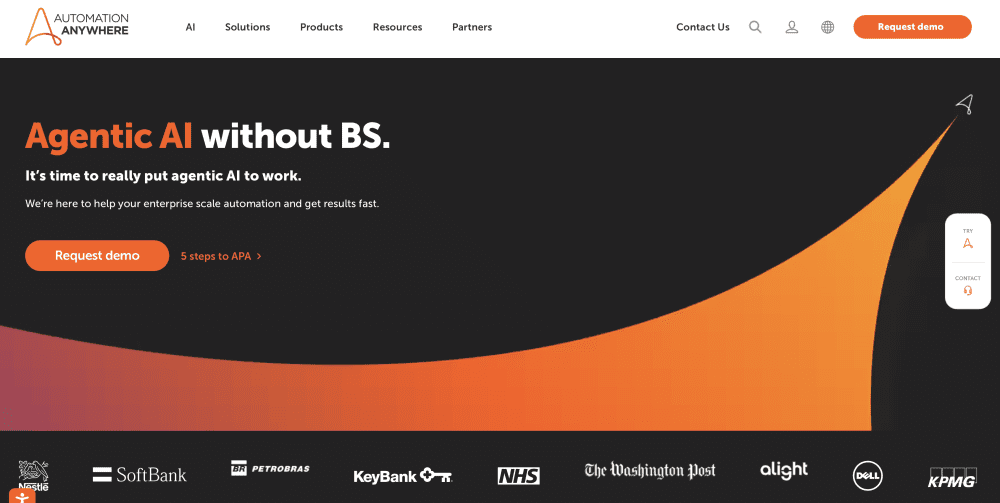
There are various SaaS platforms, such as Automation Anywhere and UiPath, that automate back-office workflows, including invoicing, claims processing, and document handling. For instance, Omega Healthcare Management Services automated administrative tasks like medical billing, insurance claims, and document processing using UiPath’s AI tools. The result: over 100 million transactions automated, 15,000+ employee hours saved per month, 40% faster documentation processing, and 99.5% accuracy, delivering a 30%+ ROI for clients.
What’s different in 2026 is that automation is moving beyond rule-based robotic process automation. In 2026, automation is increasingly handled by AI agents that can manage multi-step workflows across multiple systems. Humans won’t supervise every click anymore - they’ll supervise outcomes. The agent does the work, flags exceptions, and escalates when something looks wrong. It is a meaningful shift. AI doesn’t just enter data or trigger emails. It understands context, connects tools, executes workflows end-to-end, and knows when to ask for help.
Personalized Customer Experiences
Everyone talks about personalization, but recommending products based on past behavior is only the tip of the iceberg. Personalization isn’t just marketing, it’s how products compete today. The real value is when AI understands intent, context, and timing across every customer touchpoint.
Here’s what that looks like in practice: Amazon doesn’t just show you products you looked at last week. It connects browsing history, purchases, even items in your cart, and predicts what you might want next. As part of its broader push into AI‑driven personalization across the shopping experience, recently, they launched a new AI‑powered feature called “Help Me Decide” that analyzes browsing history, preferences, and reviews to help shoppers choose between similar products. The outcome isn’t just convenience. It’s higher engagement, more conversions, and stickier customers.
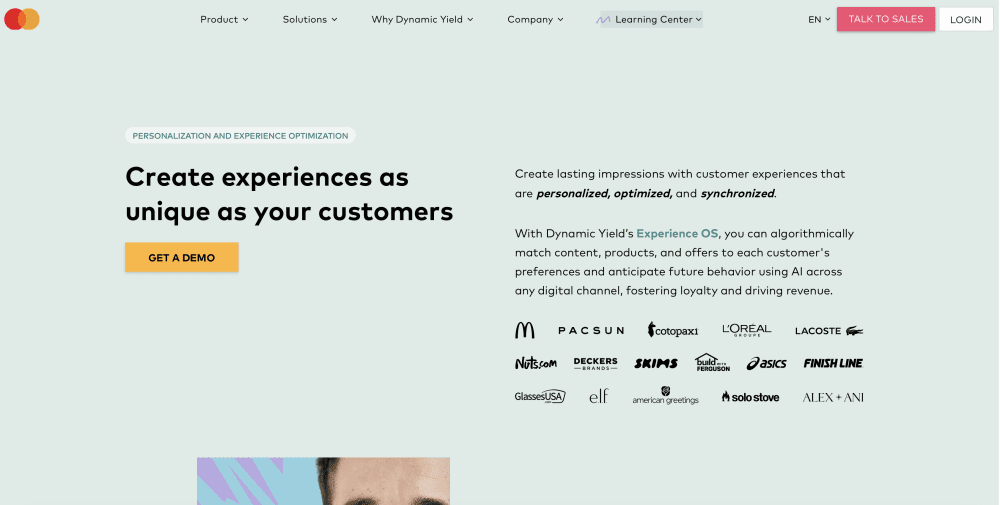
While most companies don’t build Amazon-level personalization engines, they adopt SaaS personalization inside their existing stack. Salesforce Einstein, HubSpot AI, and Adobe Experience Platform analyze customer behavior across CRM, marketing, support, and product usage to tailor messages, offers, and next-best actions in real time. Dynamic Yield and Bloomreach do the same for e-commerce, adjusting product recommendations, layouts, and content per user, not just per segment.
In 2026, this is going to go even further. Personalization will touch onboarding flows, pricing, content, support, and even follow-ups - every interaction dynamically adapting to each user. The companies that win won’t be the ones with the most data, they’ll be the ones that connect it, act on it responsibly, and let AI take the heavy lifting while humans focus on judgment and creativity. In short, personalization in 2026 won’t feel like targeting. It’ll feel like the product actually understands you, and that’s the kind of experience customers won’t forget. It is still worth mentioning that AI only works if it has access to the right data and is allowed to act on it across channels. Otherwise, you’ll get generic recommendations rather than personalized experiences.
Workforce Optimization
Most workforce planning today is still reactive. Managers look at last year’s schedules, guess what demand might look like, and hope they didn’t under- or overstaff. AI changes that dynamic completely. Instead of manually building schedules, AI systems forecast demand using historical data, seasonality, real-time activity, and operational signals. They predict how many people are needed, where, and when. Then they generate schedules that balance business needs with employee availability, skills, and preferences. What’s important here is that managers stop spending hours moving shifts around and start focusing on service quality, throughput, and team performance. As a result, they receive fewer bottlenecks, lower labor costs, and far less chaos during peak periods.
For instance, IBM reports they’ve built a sophisticated AI system that doesn’t just track headcount - it infers skill levels, predicts future skill supply, and recommends personalized learning and career paths. It means employees get assignments that match their capabilities, managers get reliable predictions, and the company can pivot quickly as business needs evolve. IBM reports time-to-hire down 50%, learning consumption 25% above industry average, and engagement up 20%.
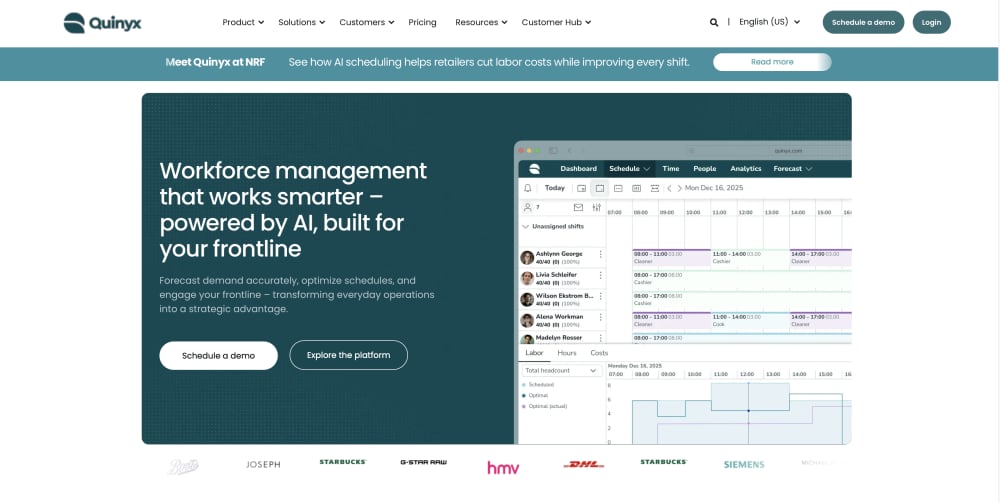
SaaS workforce management tools like Quinyx use AI to forecast labor demand and auto-generate optimized schedules that balance business needs with employee availability, skills, and preferences, all in real time. Retailers, hospitality chains, and healthcare providers use it to reduce bottlenecks, cut labor costs, and improve operational predictability without manually reshuffling shifts every week.
In 2026, workforce optimization moves beyond “smarter scheduling.” It will become an adaptive system. AI agents monitor demand, rebalance staffing on the fly, flag risks early, and escalate decisions when human judgment is needed. Humans stay in control, but they’re no longer micromanaging calendars. This shift will matter most in industries where labor is both expensive and critical: hospitality, healthcare, retail, logistics, and manufacturing.
Customer Support
Customer support used to be about headcount, coverage, and… wait times. AI changes it forever. Instead of linearly scaling support teams, companies are now using artificial intelligence to handle predictable, repetitive questions 24/7. Humans from the support team finally have time to focus on the problems that actually require judgment and empathy. AI-powered assistants can answer order status questions, process returns, reset passwords, or explain policies in seconds. No waiting. No tickets stuck in a queue. And when something does require a human, AI routes the request to the right agent based on intent, urgency, and past interactions.
The biggest shift isn’t that chatbots exist, that’s old news. It’s that support is becoming proactive and contextual. AI remembers past interactions, understands customer intent, and increasingly resolves issues end-to-end instead of acting as FAQ. Bank of America’s virtual assistant Erica handles millions of customer interactions each month, helping users with everything from transaction questions to financial insights, reducing call volumes while increasing engagement. In 2025, Bank of America announced that Erica had surpassed 3 billion client interactions globally, averaging tens of millions per month, a clear sign that AI is deeply integrated into support workflows rather than being a niche experiment.
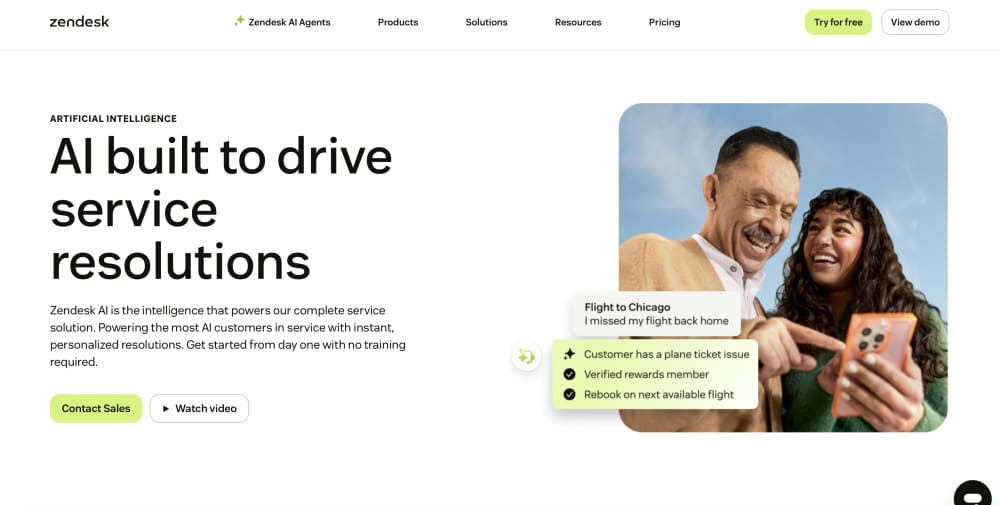
SaaS solutions like Zendesk AI and Freshdesk AI bring these capabilities to businesses of all sizes, enabling automated ticket handling, smart routing, and conversational assistance across channels. Intercom’s AI also enhances customer engagement by providing instant, personalized responses while learning from every interaction.
In 2026, customer support won’t be “AI-assisted”, it will be AI-first. Humans will still handle the edge cases and emotional moments, but AI will own the front line. Companies that get this right will resolve issues faster, retain customers longer, and spend less doing it.
Predictive Maintenance
Predictive maintenance is one of those AI use cases that sounds obvious in hindsight. Instead of waiting for machines to fail and then scrambling to fix them, AI looks at signals like temperature, vibration, pressure, error logs, and tells you something is about to break before it actually does. In manufacturing, this means machines don’t just stop randomly in the middle of a production run. The same pattern shows up in IT and infrastructure. Think servers, networks, or cloud environments. When performance degrades or abnormal behavior appears, AI flags it early so teams can act before users notice anything is wrong.
Siemens has been actively expanding its predictive maintenance capabilities. Its Senseye Predictive Maintenance has been recently expanded by Industrial Copilot offerings with new generative AI-powered maintenance capabilities. These extensions support every stage of the maintenance lifecycle, from condition-based monitoring to predictive analytics and proactive intervention to make maintenance insights more actionable and intuitive for plant teams. Early pilot use cases of Siemens’ Industrial Copilot for maintenance have shown maintenance time reductions of around 25%, supporting a shift from reactive to proactive strategies.
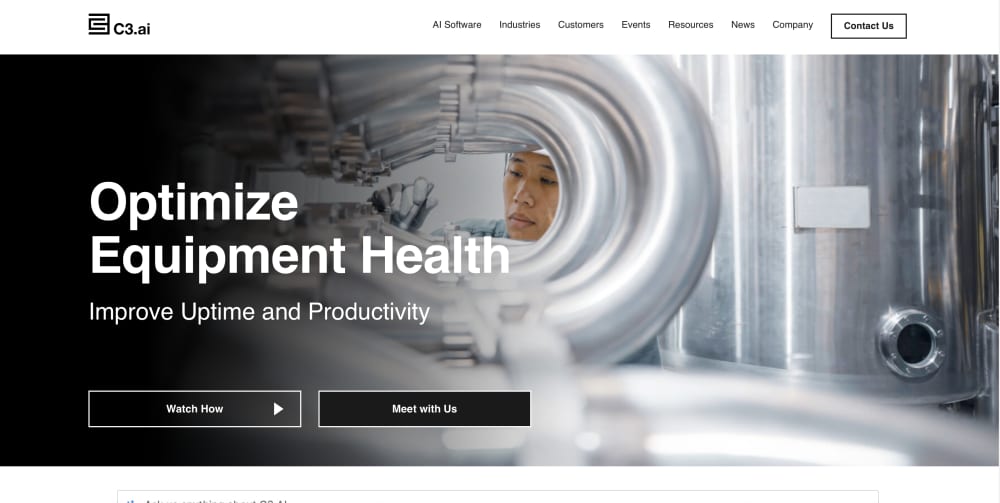
Beyond manufacturing, SaaS solutions are making predictive maintenance accessible to IT, energy, transportation, and facility management. Solutions like C3 AI monitor assets from turbines to industrial equipment, forecasting failures and scheduling maintenance. UptimeAI focuses on IT infrastructure, predicting server and network issues to prevent outages.
In 2026, it will move towards becoming not just “predictive” anymore. AI will act autonomously in routine cases: adjusting processes, triggering fixes, scheduling maintenance, ordering replacement parts, adjusting parameters, or alerting the right team instantly without human intervention for routine cases. Humans will focus on exceptions or strategic decisions, not chasing every minor warning. Think of it as a self-driving maintenance operation: continuous, real-time, and integrated across the enterprise. AI will also learn from every anomaly, incident, and repair to improve predictions and refine workflows, making systems progressively smarter.
Bottom Line
The trajectory is clear. AI is fading into the background of everyday business operations and becoming part of the infrastructure. The real advantage is no longer whether a company uses AI, but how deeply and intelligently it integrates it into real workflows. Organizations that treat AI as a strategic capability - investing in people, systems, and operating models - will pull away from those still treating it as a feature or experiment. In 2026, the winners won’t be the companies with the most AI, but the ones using it to solve real problems, amplify human judgment, and deliver measurable value.